
CLT Cottage is a compact but technically demanding addition and secondary dwelling to a heritage home in Sydney’s inner west. Delivered during the height of the COVID lockdowns on a narrow laneway site with limited access and a complex roof form.
We were brought on early and worked closely with the architect to put forward a CLT-led approach that would keep the program tight, provide supply certainty, and deliver a high-performance outcome within budget.
As timber specialists, we saw CLT as the right method for the job offering precision, structural efficiency, and a natural finish with low embodied carbon. Preclad, prefabricated panels meant we went from slab to watertight in under a week.
We planned crane access, sequenced deliveries, and managed tolerances to the millimetre. From sequencing to structure, it was a project that rewarded preparation.
Alterations and Additions
Still Space Architecture
Sellick Consultants
Brett Broadman


CLT panels - both structure and interior lining.
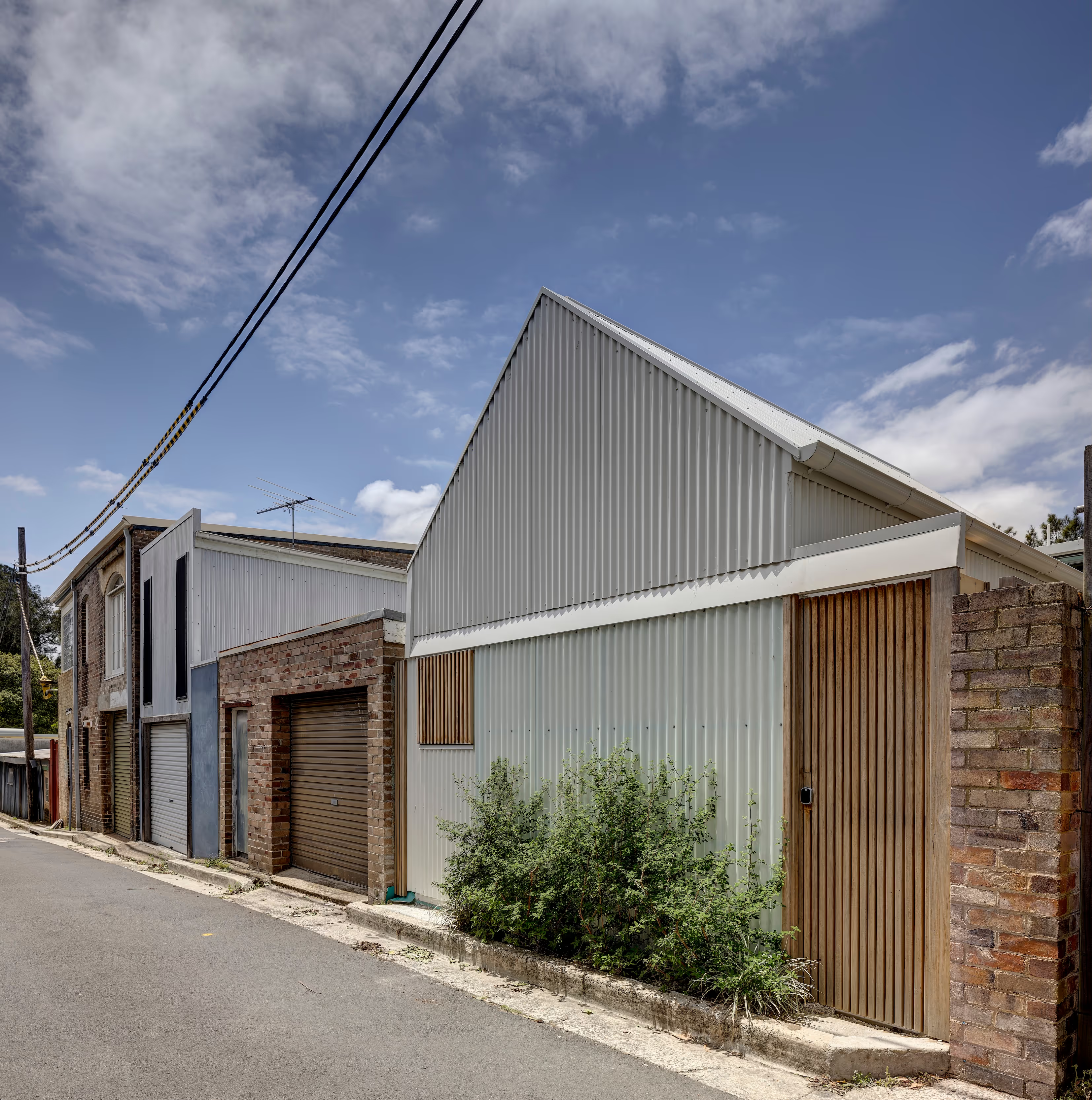
The double height studio from the rear laneway.

Laneway entry.

Translucent cladding keeps the studio light.

First floor of the rear studio.

Open plan kitchen and living.

Contrasting features of the kitchen.

Original feature arch and corbels retained.

Solid timber staircase with metal balustrade.
Our Impact

Responsible Material Use
We chose locally manufactured, PEFC/Responsible Wood‑certified CLT panels engineered from fast growth plantation pine and precision CNC‑cut to size. This choice locks carbon into the structure significantly lowers embodied emissions compared to steel or concrete, and creates minimal on‑site waste due to factory precision .

High-Performance Envelope
The CLT structure forms a robust, continuous enclosure with excellent airtightness and acoustic performance. While not highly insulative on its own, its thermal mass contributes to a stable internal environment when combined with external insulation. The result is a comfortable, low-energy building shell designed for long-term performance.

Site Efficiency
Prefabricated CLT panels and precision CNC detailing allowed us to go from slab to watertight within weeks. Lightweight panels (just ~20% the weight of steel & concrete) sped up the build schedule, reduced neighbour disruption, and improved site safety, all while maintaining precise tolerances.
Integrated Structure + Finish
The exposed CLT structure serves triple duty as structure, lining, and finish — eliminating the need for additional framing, linings, or decorative treatments. This integrated approach reduces material layers, simplifies detailing, and showcases the natural beauty of timber.
Our Process
Pre-Construction
Working closely with Still Space Architecture, we engaged early in the design process to shape a buildable, efficient outcome. Our team supported approvals with traffic, waste, and hazardous material reports, explored a range of construction methodologies, programs, and budgets, and ultimately landed on CLT for its efficiency, sustainability, and precision. The decision enabled early coordination, reduced site time, and aligned with the project’s environmental goals.

Initial design development sketch created by Still Space Architecture

Concept model designed and created by Still Space Architecture
Early Works
The early works phase combined careful deconstruction with complex site preparation. Salvaged materials were set aside for reuse, while underpinning and propping strategies protected both the neighbouring party wall and the existing heritage cottage. Excavation for the 10,000L underground water tank was strategically sequenced between the extension and second dwelling concrete pours..

Excavation of the 10000L water tank

Concrete preparation for the extension
Structure
CLT Cottage is defined by a precision-engineered Cross-Laminated Timber (CLT) system that forms the primary structure across walls, floors and roof. Prefabricated panels were craned into place, creating a robust, airtight shell with minimal waste. The lightweight timber structure reduced embodied carbon while enabling efficient construction within the constraints of the compact site.

CLT delivery and erection

Internal framing within the CLT structure
Enclosure
The building envelope was conceived as a high-performance extension of the CLT structure, wrapping the timber shell in a carefully detailed, weather-tight layer. Openings were strategically positioned to balance privacy with natural light, while maintaining thermal integrity. In the studio addition, translucent cladding was introduced to softly diffuse natural light deep into the space, creating a luminous interior while preserving privacy and reducing reliance on artificial lighting.
Cladding installed on the ground and hoisted up to enclose the structure

Rear view of the cottage with the initial installation of the Amplelite Wonderglass
Interiors
The interiors celebrate the honesty of the CLT construction, with exposed timber surfaces providing warmth, texture and continuity throughout the compact footprint. The natural grain of the panels becomes the primary finish, reducing the need for applied materials and reinforcing a calm, cohesive atmosphere. Joinery and storage were integrated with restraint, allowing the structure to remain legible while ensuring the spaces remain highly functional and adaptable.

Tile set out, installation and protection

Customer joinery built into the timber structure
Aftercare
Ongoing care was considered integral to preserving the integrity and appearance of the exposed timber interiors. Guidance was provided to ensure the CLT surfaces continue to perform well over time, with simple maintenance practices supporting durability and finish longevity. A proactive approach helps maintain the building’s airtightness, material clarity and overall performance.
Routine maintenance

Surfboard rack installation
Recognition
Awards
Publications
More Projects

.avif)


.avif)

