.avif)
Camperdown Warehouse is a standout example of adaptive re-use, where a century-old industrial shell has been transformed into a refined three-bedroom residence. Originally a motor vehicle factory and later converted into apartments in the 1990s, this project presented a unique opportunity to work within a heavy concrete structure with no internal walls, offering complete design freedom and complexity in equal measure.
Working closely with Archer Office, we delivered a highly detailed and technically challenging build, where structure and furniture blend seamlessly. New mezzanine floors were inserted with pinpoint accuracy, supported on freestanding steel columns that preserve the vast volume of the original warehouse. Custom steel joinery used for shelving, stair supports, and glazed partitions were fabricated with precision, becoming both structural and sculptural elements within the home.
Throughout, the build balances industrial character with contemporary comfort. Sliding screens, bi-fold doors, and integrated joinery allow the space to adapt easily to different uses, giving the owners flexibility without compromise. The project demanded not just attention to detail, but a collaborative approach to bespoke steelwork, glass installation, and timber finishes delivered to the highest standard.
Adaptive reuse - Apartment conversion
Archer Office
Partridge Engineers
Kasia Werstak

.avif)
Refreshed bathroom.

Custom fabricated steel sheets that give structural integrity to the mezzanine level.
.avif)
Frosted glazing used in the bathroom.
.avif)
Mezzanine that overlooks the lower level of the home.
.avif)
A pop of colour in the bathroom to contrast the otherwise dark features of the home.

Floor to ceiling window that allows natural light to enter the interior.
.avif)
Polished concrete flooring that elevates the industrial feel while providing a sleek way of living.
Our Impact

Adaptive Reuse and Structural Innovatoin
The existing warehouse structure was retained and carefully reinforced, preserving embodied carbon while extending the building’s life. New interventions were deliberately lightweight and reversible where possible, allowing the original fabric to remain legible. The introduction of Cross Laminated Timber (CLT) within the retained shell provided structural efficiency while reducing construction time and on-site waste.
Sustainable Timber Construction
CLT formed the primary structural system for new insertions, selected for its renewable properties and precision prefabrication. Manufactured off-site, panels were delivered ready to install, limiting disruption within the tight urban context. Exposed timber surfaces contribute warmth and durability, balancing the robustness of the retained masonry with a low-carbon material palette.
Flexible Plan for Evolving Living
The layout was designed to support multi-generational living and changing patterns of occupation. Independent zones can operate separately or expand into larger shared spaces, allowing the home to adapt over time. This flexibility reduces the need for future structural alterations and ensures the building remains functional as family needs evolve.
Enduring Performance
Upgrades to the building envelope improved thermal comfort and overall efficiency while working within the constraints of the existing structure. Natural light and cross-ventilation were prioritised to enhance liveability across the deep floorplate. The result is a resilient, future-focused building that balances heritage character with long-term environmental performance.
Our Process
Pre-Construction
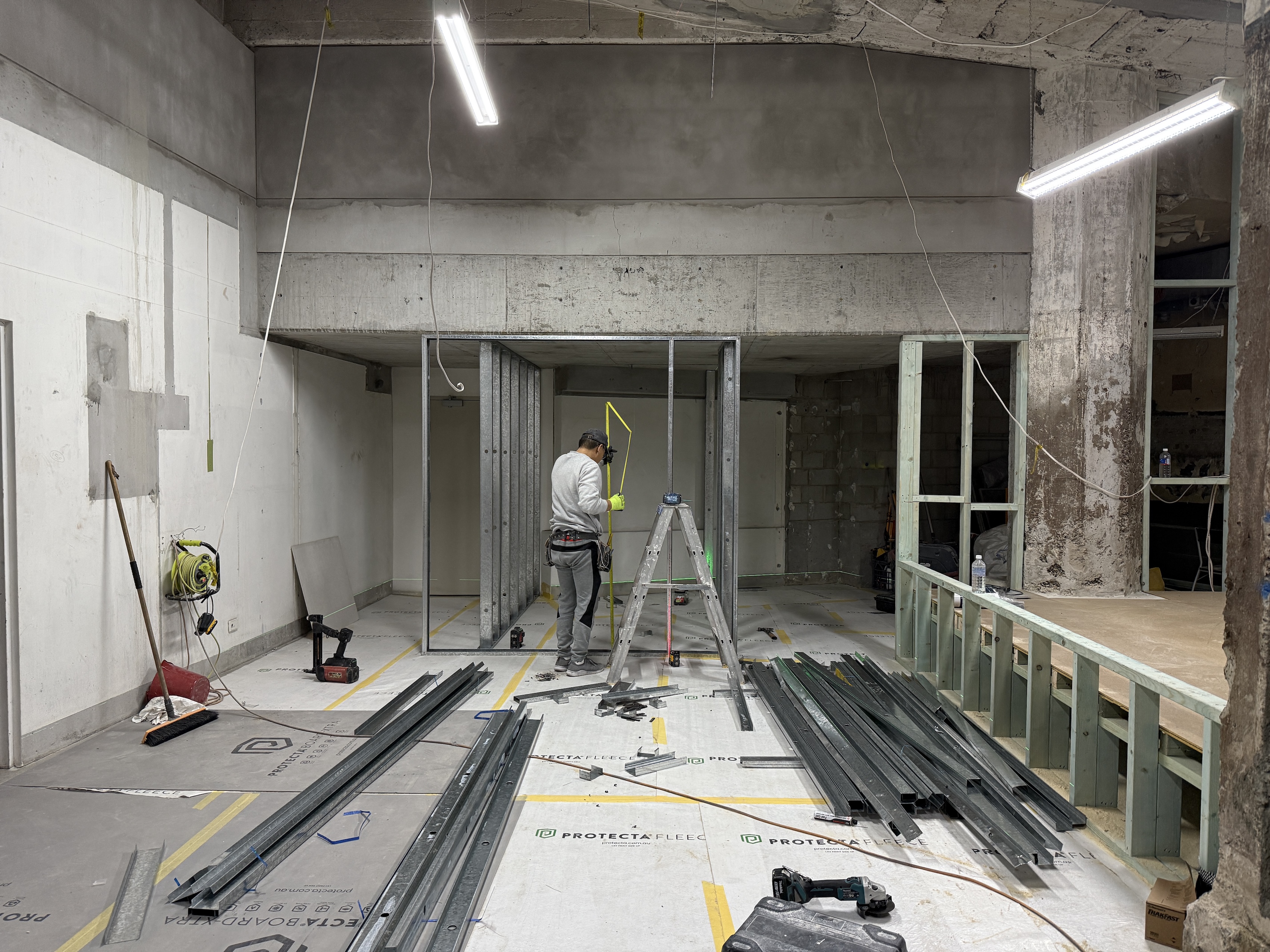
As with all adaptive reuse projects, early involvement was critical. We worked closely with Archer Office to understand the existing structure, define the construction approach, and plan staging around the building’s constraints. Detailed investigations informed the structural, services, and sequencing strategy, ensuring new elements could be cleanly introduced into the concrete shell. This front-end work allowed us to manage complexity, reduce risk, and preserve what mattered.

Original Car Assembly Factory under contruction

Concrete Volume infilled with new structure and joinery
Early Works
Early works involved the careful removal of existing fit-out and redundant services, while retaining and protecting shared infrastructure servicing other parts of the building. The concrete shell was then prepared for new works through patching, sealing, and structural modifications, establishing a clean foundation for the subsequent insertions.

Stripped Shell progress during demoltion

Collaboration between architect and carpenter
Structure
The structural solution balances precision engineering with spatial clarity. A series of oversized steel members form the cantilevered upper floor, introduced carefully within the constraints of the existing substructure. Rather than replacing the original framework, the new steel works in concert with it, transferring loads efficiently while maintaining the integrity of the retained shell. Slender steel blades were detailed to support the glass bridge, doubling as integrated shelving to reduce visual weight and embed structure within the architecture.


Enclosure
Predominately an internal fit out, key interventions to the façade brought significant internal benefits. A large-format single-pane highlight window and expansive sliding glass doors were craned into position during a coordinated night-time road closure. Once the opening was established, the enclosure was upgraded to enhance thermal and acoustic performance within the retained concrete shell, improving liveability without altering the building’s overall character.


Interiors
The interiors draw directly from the building's industrial heritage, allowing structure and function to shape the spatial character. Much of the existing structural framework was left exposed and celebrated, becoming a defining feature of the spaces. Steel bracing elements were expressed rather than concealed, doubling as open shelving and reinforcing the utilitarian language of the warehouse. Joinery was designed with practicality in mind, carefully fitted within the established structural rhythm so that storage and services feel integrated rather than applied.

Recognition
Awards
Publications
More Projects

.avif)


